
Joe Giraudo – N7JEH
I enjoy puttering in my shop. I am also a cheapskate. With the onset of the 2026 wildland fire season, Rock Mountain Power announced that planned preventative power outages could be anticipated during high wind conditions to reduce power line induced wildland fires. This got me to think about what are the highest priority loads in my house and how might I keep them powered up during a protracted power outage.
During the warmer months the priority loads are the refrigerator and freezer. Both of these can survive a short to medium duration of up to one day without power if they remain shut but a guy’s gotta eat!
We have three conventional gasoline-powered generators; a 6 kw. in our motorhome, and two 4 kw portable units. The downsides of these units are:
- The need to store significant quantities of gasoline for a long outage.
- Replenishing fuel during a more widespread outage may be a problem.
- These units are noisy and cannot be run during the night without disturbing neighbors
- They must be located outside, away from open doors and windows to minimize carbon monoxide risk which also results in long larger conductor power cord runs to the loads.
My search for an alternative took me to solar generators, which are sold by many retailers both online and in stores. These ready-made units come in various sizes to meet your individual needs. These are called solar generators but can powered from many sources in addition to solar panels including DC wind turbines or DC waterwheel or turbine generators.
A solar generator is just a solar regulator, a rechargeable battery and a DC to AC inverter constructed in a portable enclosure. The regulator takes DC current and feeds it to a rechargeable battery in a manner compatible with the battery’s chemistry. The battery stores energy for use much like an air receiver for a compressor. The Inverter converts DC to AC for use by the selected load (appliances, lights, TVs etc.). They also usually include USB and other DC outputs for phone and tablet charging. These units can be quite expensive.
This project was assembled mostly with items I already had on hand (the cheapskate part).
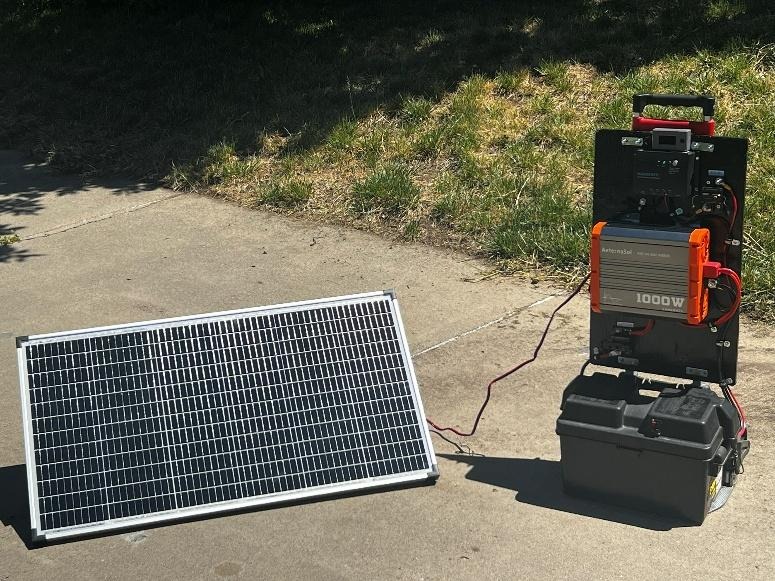
My design requirements:
- A unit capable of powering a critical load (home heating, refrigerator, freezer) during a power outage.
- Must be portable enough to be moved to the location of the load with relative ease.
- Build using materials and equipment on hand as much as possible.
- Design for possible future expansion / improvement.
For ease of movement of this project to the desired loads, I decided to build this on a lightweight folding hand truck I had. I build a “breadboard to install the components from a piece of scrap ½-inch plywood and for the initial proof-of-concept phase I decided to use my first battery pack which has a group 20 deep cycle lead acid battery inside. I no longer use this for portable radio ops as I have built a LiFePO4 battery box as a replacement. I power this with one or two 100-watt solar panels depending on need.
The following is an estimate of power requirement for some common home applications:
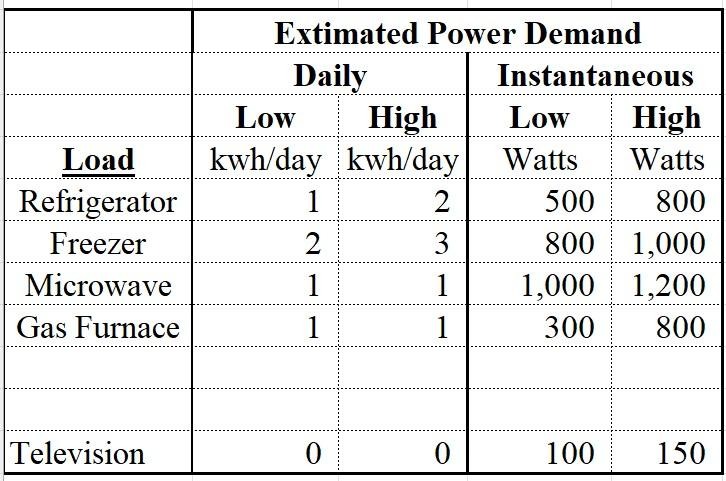
Given these estimates I decided to purchase a 1,000-watt, pure sine wave inverter which can supply 1,500 watts peak for starting. This was one of the components I did not already own and was sourced from Amazon for approximately $65.00.
The battery is charged by a Renogy Wanderer 30 Amp controller. I already had this unit and it has the ability to handle 12 or 24 VDC input so two 100 watt solar panels can be hooked up in either parallel or series depending on wire run length.
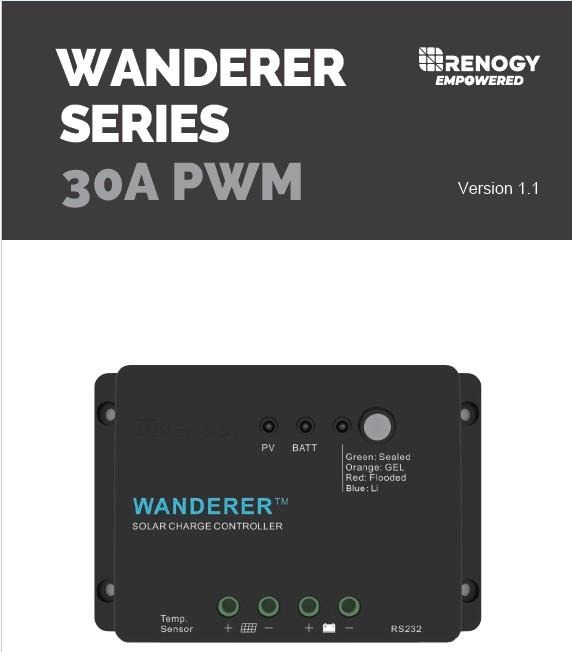
This controller can be set up to charge Lithium, flooded or glass mat batteries.
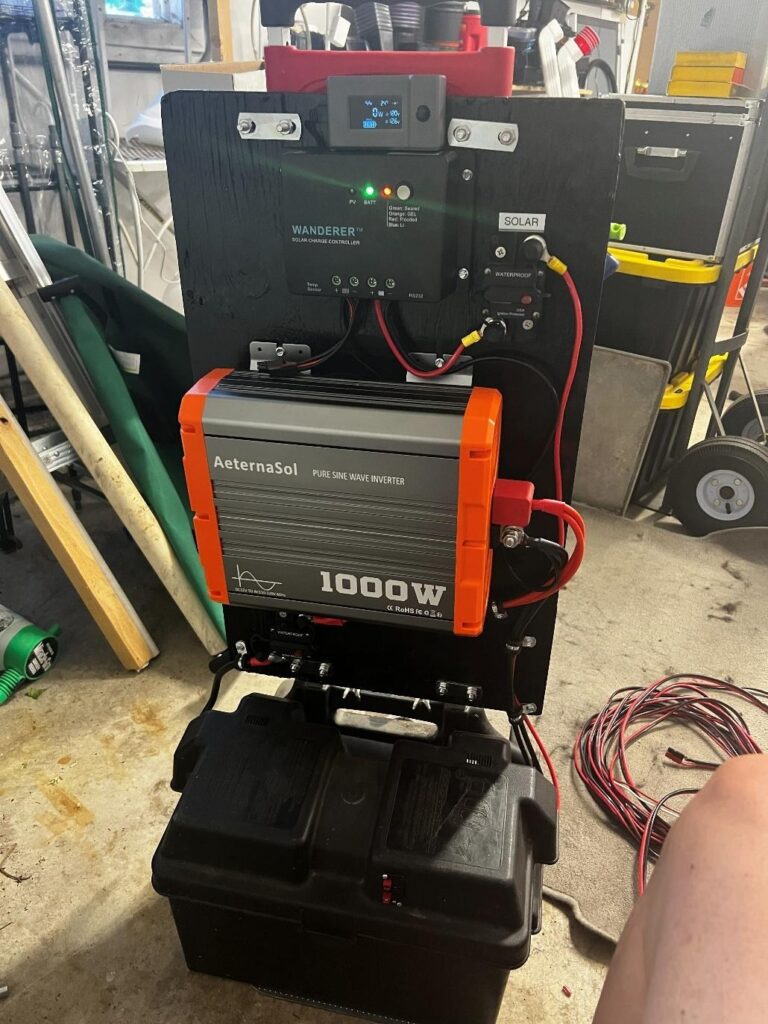
The only other items I added were two DC circuit breakers between the solar controller and the battery and between the battery and the inverter. These are included to reduce over current fire risk and also act as manual disconnect switches isolating the main components.
When this unit is parked in standby it is connected to a Battery Tender trickle charger to maintain the battery. The unit on top is a remote display for the inverter.
Future changes:
This is a small unit and should be enlarged to increase versatility. It was built as a proof-of-concept project.
The lead acid battery is heavy. It also has limited discharge capacity and life compared to more modern batteries. It also poses a hydrogen gas explosion risk. I plan to replace this with a 100-150 Amp Hr. lithium iron phosphate battery (LiFePO4) in the near future. (Prime Day is coming!) I can swap between this and my LiFePO4 battery box in less than 5 minutes so I can use it in a pinch.
This was a fun build and even my wife (N7URF) thinks this is a good addition to our generator arsenal.
73
DE N7JEH
dit dit
Denton Bramwell